
The Forum is organizing a panel discussion with His Royal Highness Prince Hassan bin Talal
Date & Time: 14 April 2026-14 April 2026 | 11:00 AM-01:00 PM
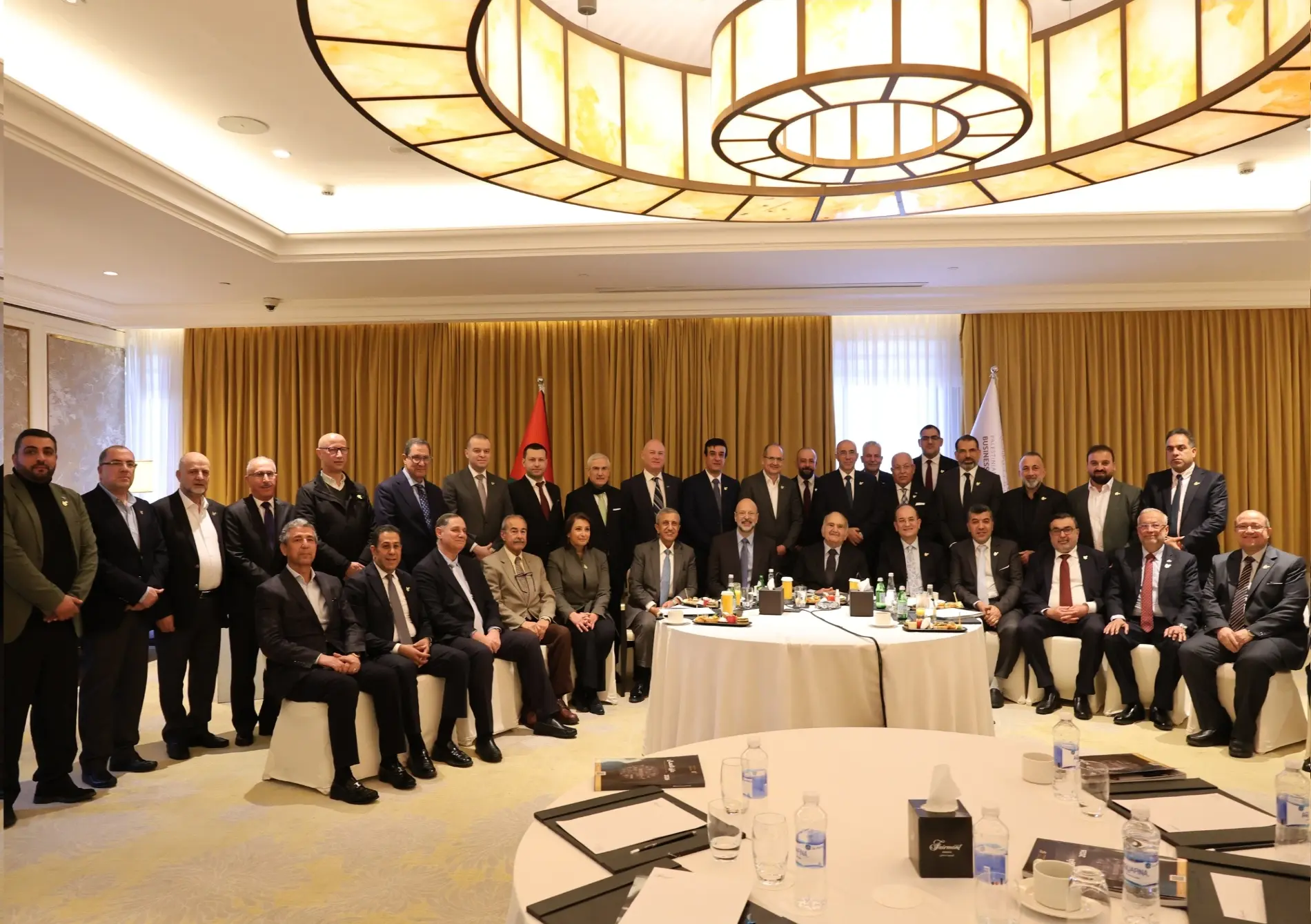
The session, a panel discussion titled “Jordan in the Context of Regional Geopolitical Changes,” was attended by a select group of business leaders and economic experts, who discussed the current state of Jordanian-Palestinian economic relations and prospects for their development in light of current challenges.
Members Only
Amman, April 14 (Petra) – At the invitation of the Palestinian-Jordanian Business Forum, His Royal Highness Prince El Hassan bin Talal participated on Tuesday in a dialogue session entitled "Jordan in Light of Regional Geopolitical Changes." The session, attended by a select group of business leaders and economic experts, addressed the current state of Jordanian-Palestinian economic relations and prospects for their development amidst ongoing challenges.
Prince El Hassan delivered remarks addressing the profound transformations underway in the region, warning of escalating Israeli extremism and the accompanying growing concerns about the future of Palestinians, particularly in light of talk about annexation plans.
He also highlighted the humanitarian dimension of the crisis, recalling that approximately 2,900 children remain missing under the rubble, urging that these figures be viewed as human stories, not mere statistics.
His Royal Highness emphasized that the concept of trade is no longer measured solely by the volume of exports, but rather reflects the degree of fairness in market access, given the restrictions imposed on border crossings and the movement of goods. This underscores Jordan's pivotal role within Arab integration projects. He emphasized that this role must transcend its descriptive dimension and transform into a productive economic value based on developing logistics services, building advanced databases, and operating within a multi-corridor network.
In a related context, His Highness pointed out that the region is entering a phase of structural instability, where military escalation is no longer an exceptional event but a constant factor reshaping economic flows and raising risk levels. This underscores the importance of Jordan's position as a stable country capable of operating within a turbulent regional environment.
His Highness also outlined strategic priorities for economic transformation, including: transforming the transit location into an economic value-added asset, building an advanced, data-driven logistics services system, and working within a network of multiple regional corridors to enhance economic integration with Palestine.
His Highness affirmed that the global system is moving towards multiple economic corridors, but the deeper transformation lies in the transition to a sustainable economy based on equitable access, preserving human dignity, and safeguarding identity, in line with the "people-first" approach to development. In his remarks, His Highness emphasized the importance of concepts he has long advocated, foremost among them comprehensive human security, which links economic, water, and social security, and the necessity of "humanizing statistics" so that development policies remain connected to human dignity and actual needs.
He also pointed to the importance of anticipating and predicting crises before managing them, within an approach based on in-depth analysis and accurate data.
The Chairman of the Forum's Board of Directors, Engineer Nazmi Atmeh, reviewed the most prominent challenges facing the business sector, particularly supply chain disruptions and energy shortages, stressing the importance of strengthening economic cooperation and trade between Jordan and Palestine.
He also presented a numerical analysis of the current trade situation, affirming the existence of promising growth opportunities despite the restrictions imposed by the Israeli side.
For his part, the Forum's Vice Chairman, Saleh Marqa, addressed the reality of trade between the two sides, noting that the available potential far exceeds the current volume of trade, but that logistical and political challenges, especially after the war, have led to a decline in the number of trucks and the movement of goods. Marqa proposed a package of practical initiatives to increase the volume of trade, focusing on strategic sectors such as pharmaceuticals and food industries, along with raising awareness of the Jordanian market and addressing existing obstacles.
The session witnessed extensive discussions among the attendees, addressing the importance of developing sustainable financing tools, particularly development endowments as an alternative to nuclear endowments, and their role in supporting community resilience and enhancing economic stability. Initiatives to empower youth and enhance their role in achieving economic integration were also presented, along with an emphasis on the need to follow up on the proposals and initiatives put forward during the meeting and transform them into actionable programs.
The session concluded by stressing the importance of building upon these dialogues to strengthen the Jordanian-Palestinian partnership, thereby achieving economic integration and supporting regional stability in a period marked by unprecedented challenges.